★★★★★
“He's awesome!!!”

Roof leak repair starts with the source: shingles, flashing, pipe boots, vents, or roof edges. We inspect the surrounding roof before recommending a repair. Call for an active leak or urgent concern; use the request form for planned work.
An isolated leak may be repairable.
The surrounding shingles, flashing, and decking condition determine whether a localized repair is practical.
Widespread wear or repeated leaks? Compare roof replacement options. For missing shingles or new leaks after severe weather, see our storm damage roof inspections.
Read what customers say about their experience with Precision Exteriors.
“He's awesome!!!”
“Thank you for meeting with me and giving me a free estimate. You both were great, honest and informative. I appreciate all of your help very much”
“Wonderful experience!”
Call about active leaks, missing shingles, or loose flashing. The inspection determines the source and extent.
Tell us where water appears inside the home and when you first noticed it. The visible stain does not identify the roof source by itself.
A small area of roof damage may be repairable, but nearby shingles and the underlying details still need to be reviewed.
Chimneys, walls, skylights, vents, and other roof transitions can need focused attention when water shows up nearby.
Roof penetrations and transitions are part of the inspection because a repair should address the visible source, not only the interior symptom.
If wind, hail, heavy rain, or a falling branch preceded the problem, note what you saw and arrange a visible-condition inspection.
Overflow or drainage problems near a roof edge can overlap with fascia, flashing, and shingle concerns. Tell us where the water lands.
We use the symptom to start the conversation, then inspect the roof details that can change the repair.
We ask where the leak, missing material, or visible concern appeared and what changed before you called.
We review the problem area along with nearby shingles, flashing, penetrations, roof edges, and drainage details that may connect to it.
We explain the smallest sound scope: the damaged area, connected flashing or drainage work, and any wider wear that makes replacement worth considering.
When you approve a repair, the written scope controls what is completed. We clean the work area and review the result with you.
A repair depends on the damaged area and the condition of the roof around it.
When the issue is isolated and the surrounding roof is still performing, a targeted repair may be the appropriate next step.
A repair scope may need to include flashing, a pipe boot, a vent, a valley, a roof edge, or a related gutter condition when the inspection connects those details to the problem.
Widespread wear, repeated failures, soft decking, or several failing areas can shift the conversation toward a broader roof plan. See the separate replacement service for that decision.
Review roof replacement planningAfter wind, hail, debris, or heavy rain, we explain what is visibly documented and what repair or replacement questions remain. Your insurer makes coverage decisions.
See storm damage inspectionsCompleted work
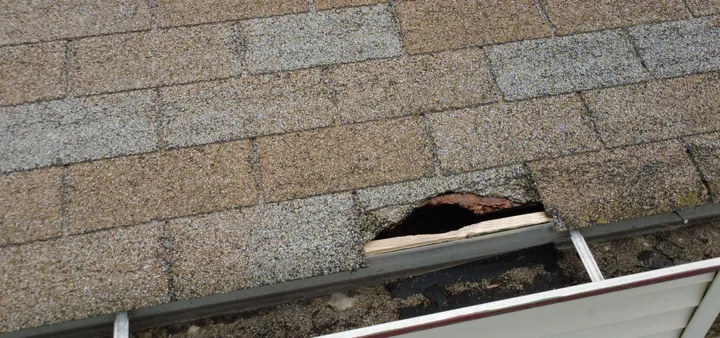
Before work · roof inspection · Existing roof-eave hole before repair
Sicklerville, NJ · Skylight and Roof Leak RepairThis Sicklerville repair targeted the skylight area and holes or damaged roofing found during inspection.
Read the Sicklerville project storyWater can enter away from the ceiling stain. We review accessible roof and moisture clues together.
We look at the area you noticed and the surrounding visible roofing rather than assuming the interior symptom points to one shingle.
Chimneys, walls, skylights, vents, pipe boots, and valleys can change the repair plan when they are near the visible concern.
Visible attic moisture, wet insulation, or darkened roof decking can add context. We explain what can and cannot be confirmed safely during the visit.
If water is collecting or overflowing near the roof edge, we review the connected gutter and downspout conditions so the repair does not ignore the drainage path.
Note where water appears, photograph interior stains when it is safe, and look for missing material from the yard or driveway. Do not climb onto the roof or use an unstable ladder to investigate. OSHA residential fall-protection guidance explains why elevated roofing work requires appropriate protection and training.
Use these homeowner guides to describe what you noticed and understand the questions a repair scope should answer.
Review safe first steps, common leak points, and the information to share with a roofer.
Read: Roof Leak Repair: What to Do FirstSee why water near chimneys, walls, valleys, vents, and roof edges can need a closer look.
Read: Roof Flashing Leak SignsSee the immediate safety steps and roof details worth documenting after high wind.
Read: Missing Shingles After a WindstormUse a practical checklist to compare inspections, written scope, communication, and cleanup.
Read: Choosing a South Jersey RooferFree inspection request
Tell us where the leak, missing shingle, flashing concern, or other roof problem appeared. The contact details you provide let us confirm the property and the right type of visit.
Prefer to talk now? Call 856-292-7282
Answers about isolated leaks, connected roof details, replacement decisions, and storm-related concerns.
Yes, when the leak is isolated and the surrounding roof is serviceable. Repeated leaks, brittle shingles, or widespread wear may change the recommendation after inspection.
We can inspect leaks, missing or lifted shingles, flashing, pipe boots, vents, and other visible roof trouble spots. The work included is confirmed in the written estimate.
Request an inspection when you notice water, missing shingles, or other changes. For an active leak or urgent concern, call us directly.
Areas we serve
See where Precision Exteriors provides roof repair inspections across South Jersey, Southeastern Pennsylvania outside Philadelphia, and Northern Delaware.
View all service areasFor an active leak, call us to discuss availability. For planned repairs, request an inspection and describe where the problem appeared.