
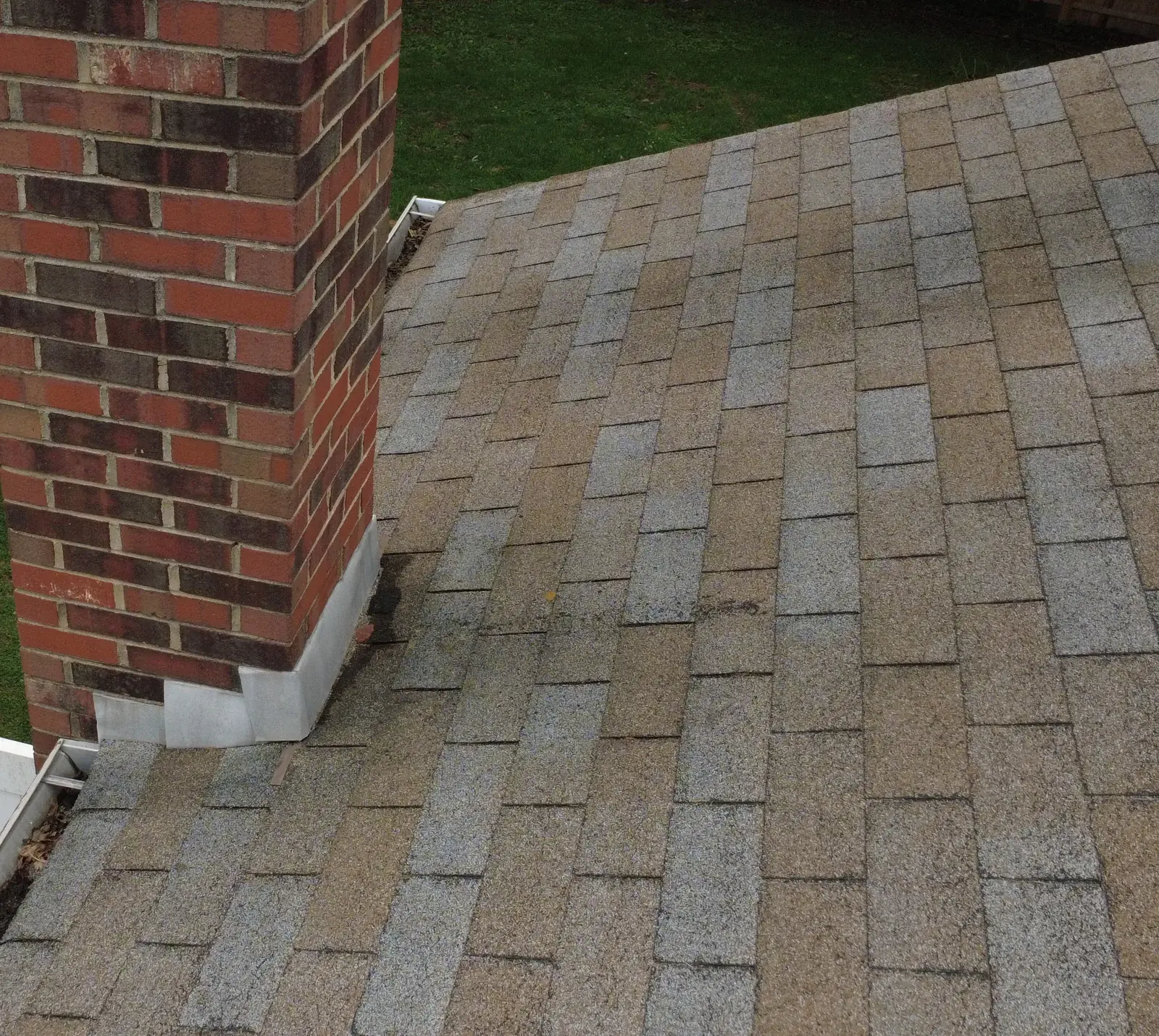
Roof flashing leaks often start at a chimney, wall, vent, valley, or roof connection. Nearby shingles can still look intact. Ceiling stains near an exterior wall, damp attic decking, and drips during wind-driven rain are clues to share with the roofer.
Wind, aging sealant, debris, previous repairs, and freeze-thaw cycles can affect these details. An inspection needs to trace the water path before choosing the repair.
Common Places Flashing Leaks Show Up
Flashing is used wherever water needs extra direction. Common concern areas include:
- Chimneys
- Skylights
- Sidewalls and headwalls
- Pipe boots and roof vents
- Valleys
- Dormers
- Low-slope tie-ins
- Porch or addition roof connections
From the ground, you may not be able to see the exact issue. Interior clues can still help. Look for ceiling stains near walls, damp attic decking, staining around a chimney, peeling paint, musty attic smells, or drips that appear only during wind-driven rain.
Why Flashing Leaks Can Be Confusing
Water does not always drip straight down from the entry point. It can move along rafters, decking, insulation, or wall cavities before it becomes visible. That means a stain in one room does not always mean the roof opening is directly above it.
Flashing problems can also be mistaken for siding, gutter, or window issues. If water appears near an exterior wall or corner, the inspection should look at the roofline, wall transition, gutters, and nearby exterior details together.
What a Roof Inspection Should Review
Ask the roofer to review flashing, surrounding shingles, roof penetrations, gutters, fascia, and the interior stains or drips you can show safely.
The repair estimate should identify the affected detail, such as a pipe boot, chimney flashing, wall flashing, or valley, and explain how it relates to the water entry.
For broader leak questions, read the roof leak repair guide or review the roof repair service.
If you see stains, drips, or flashing concerns around your roofline, request a free inspection or call Precision Exteriors at 856-292-7282.
Questions homeowners often ask
What is roof flashing?
Roof flashing is material used around roof transitions, walls, chimneys, vents, and other details where water needs to be directed away from openings.
Can flashing cause a roof leak even if shingles look fine?
Yes, a leak can start around flashing, sealant, wall intersections, or penetrations even when nearby shingles still look intact from the ground.
Should homeowners climb up to inspect flashing?
No, homeowners should check safely from the ground or inside the attic and schedule a professional inspection for roof-level concerns.