
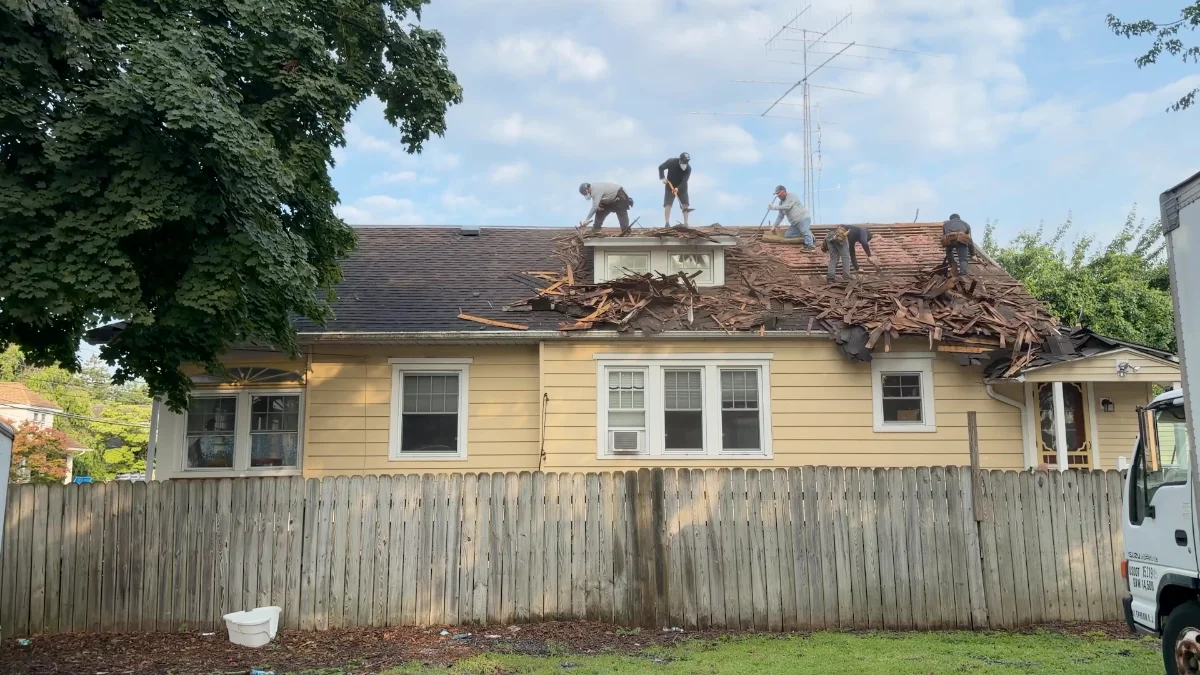
Some roof replacements look straightforward until tear-off reveals what has been covered by earlier roofing work. At this Woodbury, New Jersey home, the crew did not remove just one asphalt roof. There were two layers of asphalt shingles, with cedar shake underneath them.
By the time the old roofing was removed, the tear-off debris weighed more than 30,000 pounds and required two dumpsters. The project photos show the progression from multiple old roof layers to exposed spaced wood boards and the installation of new plywood decking.
What the Crew Uncovered
The roof assembly included:
- Two layers of asphalt shingles
- Cedar shake beneath the asphalt layers
- Spaced wood roof boards exposed after the cedar was removed
- More than 30,000 pounds of tear-off debris
- Two dumpsters needed for disposal
- New plywood decking installed before the replacement roof continued
This was not a routine one-layer tear-off. Removing the asphalt and cedar created much more material to handle, changed the disposal plan, and exposed the older roof structure beneath it.
Why Multiple Roof Layers Change the Job
A homeowner looking up from the yard may not be able to see every material beneath the surface. Once tear-off begins, each layer must be removed and the exposed roof structure must be evaluated before the replacement system continues.
On this Woodbury project, the crew worked through two asphalt layers and the cedar shake below them. After the cedar was removed, the spaced wood roof boards were visible. New plywood decking was then installed across the roof to create a solid surface for the replacement roofing system.
The large amount of debris also mattered. More than 30,000 pounds of removed roofing could not be handled like an ordinary single-layer tear-off, so the project required two dumpsters.
What the Photos Document
The project photo set records the major stages of the work:
- Crews removing the old asphalt and cedar materials
- Spaced wood roof boards becoming visible during tear-off
- Two truckloads of plywood arriving for the new deck
- New plywood being carried and installed across the roof
- An overhead view showing the roof replacement progressing section by section
These photos are useful because they show what a layered roof tear-off actually involves. The work hidden beneath the finished shingles can be a major part of the project.
Questions to Ask Before a Roof Replacement
Before approving roof work, ask how the estimate handles multiple roofing layers, cedar shake, disposal, and new decking. The contractor should also explain how concealed conditions will be documented and discussed if the tear-off reveals a different roof assembly than expected.
For a broader overview, read our roof replacement timeline and review Precision Exteriors’ roof replacement service.
Woodbury Roof Tear-Off Questions
What was underneath the asphalt shingles on this Woodbury roof?
The crew removed two layers of asphalt shingles and then uncovered cedar shake beneath them. After the cedar was removed, the older spaced wood roof boards were visible.
How much debris came off this roof?
The removed roofing weighed more than 30,000 pounds and required two dumpsters for disposal.
Why was new plywood installed on this project?
After the asphalt layers and cedar shake were removed, the crew installed new plywood decking across the roof to create a solid surface before the replacement roofing system continued.
Can every hidden roof layer be seen before tear-off?
An inspection may provide clues about older roof materials, but the complete roof assembly is not always visible until removal begins. The contractor should explain how any newly exposed conditions will be documented and discussed.
Start With a Roof Inspection
Every roof has its own history. If you are planning a replacement in South Jersey, Precision Exteriors can inspect the visible roof, attic, flashing, ventilation, and drainage, then explain the next step in plain language. Schedule a free roof inspection or call 856-292-7282.