
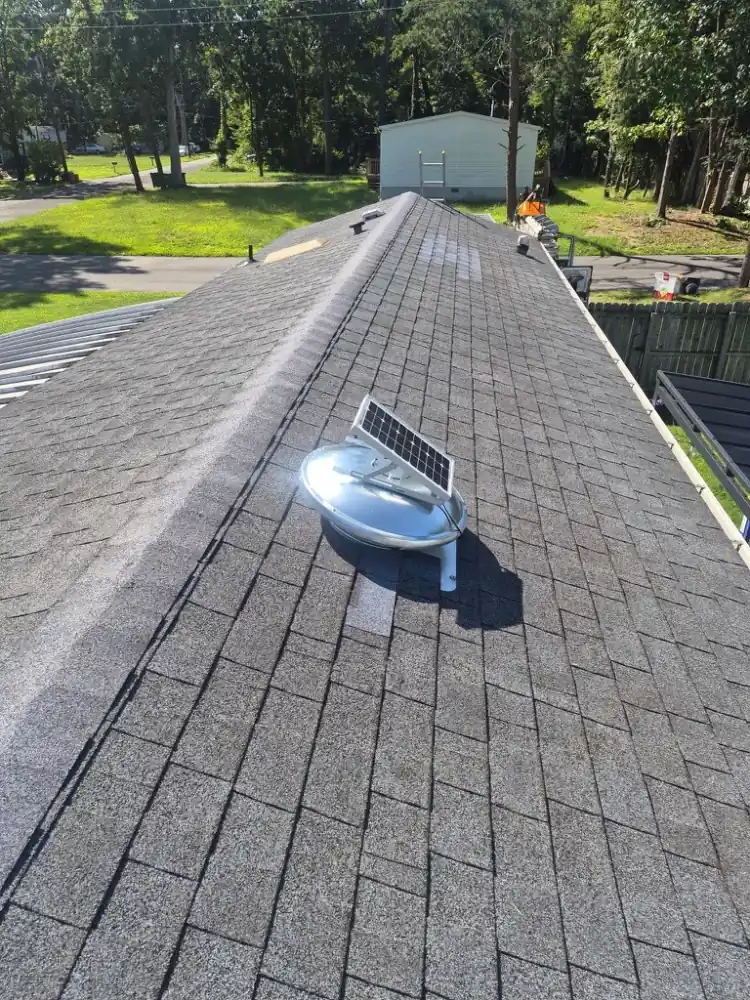
Attic moisture, condensation, stained decking, and unusually hot upper rooms are reasons to review roof ventilation. These symptoms can also involve leaks, insulation, or air escaping from the living space, so adding a vent may not address the cause.
Before roof replacement, ask how the existing intake, exhaust, insulation, and visible moisture clues affect the proposed work.
What Roof Ventilation Is Supposed to Do
Most attic ventilation systems need a balance of intake and exhaust. Intake usually comes from lower areas such as soffits. Exhaust usually leaves through higher roof areas such as ridge vents or roof vents.
The goal is steady airflow. Fresh air enters low, warm and moist air exits high, and the attic is less likely to trap heat or moisture. The exact setup depends on the roof design, attic layout, insulation, and existing venting.
Signs Attic Airflow Should Be Reviewed
Homeowners do not need to diagnose ventilation themselves, but these clues are worth mentioning during an inspection:
- Hot upper rooms in summer
- Musty attic smells
- Stained roof decking
- Damp or compressed attic insulation
- Rust on attic fasteners
- Frost or condensation in winter
- Peeling paint near upper ceilings
- Large icicles or repeat ice buildup at roof edges
- Bathroom or kitchen fans venting into the attic instead of outside
- Soffit vents blocked by insulation
Some of these issues can overlap with roof leaks, plumbing leaks, bath fan problems, or insulation gaps. That is why the attic and roof should be reviewed together.
Why Ventilation Matters Before Shingles Go On
Roof replacement is an opportunity to review ventilation while the roofing system is being worked on. If ridge vent, intake venting, decking, flashing, or exhaust details need attention, they should be part of the written scope before the job begins.
The estimate should state whether ventilation is being changed, retained, or reviewed further during tear-off.
Moisture, Condensation, and Hidden Damage
Not all attic moisture comes from rain. Warm indoor air can leak into the attic through gaps, recessed lighting, attic hatches, plumbing penetrations, bath fans, or poorly sealed areas. When that air meets cold surfaces, condensation can form.
Over time, moisture may stain decking, dampen insulation, or create a smell that homeowners mistake for a roof leak. A roofing inspection cannot solve every insulation or air-sealing issue, but it can identify roof and venting details that deserve attention.
Winter Roof Concerns
When attic heat warms the underside of the roof, snow can melt and refreeze near colder roof edges. Gutters, insulation, air leaks, and ventilation can all influence that behavior.
If winter roof-edge ice, recurring icicles, or ceiling stains have been a pattern, mention it before roof work begins. It may change what should be inspected.
Questions to Ask About Ventilation
Before approving a roof replacement, ask:
- Is the current ventilation setup being changed?
- Are intake vents clear?
- Is there enough exhaust ventilation for the roof design?
- Will bath fans and other exhausts be checked for proper routing?
- What happens if stained or soft decking is found during tear-off?
- Are there insulation conditions that should be handled by another specialist?
Planning roof work? Request a free roof inspection or call Precision Exteriors at 856-292-7282.
Questions homeowners often ask
Why does attic ventilation matter during roof replacement?
Ventilation helps manage heat and moisture in the attic, so it should be reviewed before the new roofing system is installed.
Can poor ventilation look like a roof leak?
Yes, attic moisture, condensation, stained decking, and damp insulation can sometimes be connected to airflow problems instead of an exterior leak.
Should insulation be checked at the same time?
Yes, blocked intake vents, uneven insulation, or air leaks from the living space can all affect attic performance.