
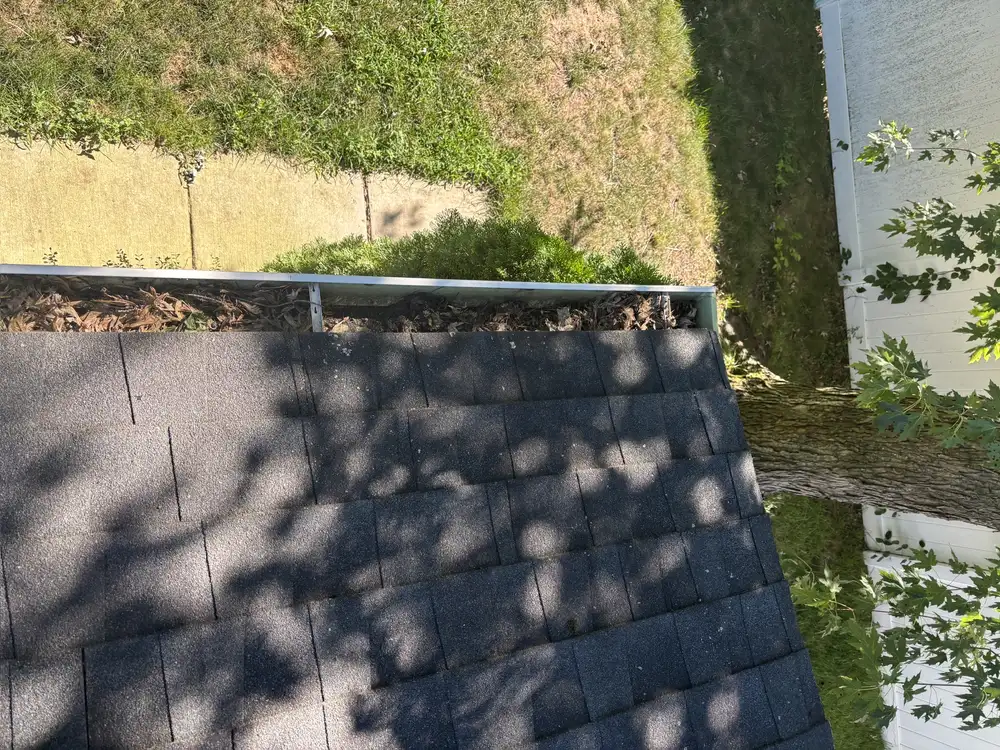
Gutter cleaning can clear leaves and debris that block water flow. If gutters still overflow after cleaning, have the pitch, seams, fasteners, downspouts, and fascia checked.
Cleaning cannot straighten a damaged gutter, repair its supports, or change where a downspout releases water. Those conditions need a separate repair or drainage plan.
What Gutter Cleaning Can Fix
Cleaning is a useful first step when the visible problem is buildup inside the gutter. It can:
- Remove leaves, organic debris, and other visible buildup from the gutter channel.
- Clear accessible debris near an outlet or downspout opening when that blockage is the cause of restricted flow.
- Help show whether overflow improves once the channel is clear.
- Create a clearer starting point for reviewing the gutter, outlets, downspouts, roof edge, pitch, and fascia.
If debris is the only obstruction, clearing it may restore normal flow. Standing water or overflow that continues afterward needs further inspection.
What Cleaning Cannot Repair
Cleaning and repair are separate questions. A clear gutter can still have one or more of these problems:
Poor pitch
A gutter needs to move water toward its outlet. Cleaning does not change the slope of a gutter run, so standing water or repeated overflow after debris is removed may call for a pitch review.
Gutter damage
Cleaning does not straighten a bent section, close a hole, reseal a failed seam, or reattach a run that is pulling away from the home. Those conditions need to be evaluated as repair or replacement concerns.
Downspout problems
A cleaning may clear an accessible clog near the outlet, but it cannot repair a crushed or disconnected downspout. It also does not change where the downspout discharges, so note where water lands after it leaves the roofline.
Fascia condition
The board or trim behind a gutter supports the roof-edge system. Cleaning does not repair fascia that is split, softened, or otherwise damaged. If the gutter is loose or pulling away, the fascia should be reviewed before another gutter scope is attached to it.
Safe Things to Observe From the Ground
Keep the first check at ground level. Look from the yard, sidewalk, or driveway during or soon after rain and note:
- Where water spills over the front or back of the gutter
- Whether a gutter run looks sagged, separated, or visibly bent
- Water staining on fascia, siding, or trim below the roof edge
- Soil or mulch washing out beneath a discharge point
- Where each downspout releases water and whether it is disconnected
- Debris that is visible from below without reaching toward the roof
Do not walk on the roof or reach from an unstable ladder just to inspect a gutter. OSHA’s residential fall-protection guidance is written for employers and work crews, but the homeowner takeaway is straightforward: elevated roof work requires the right protection and training. Arrange qualified help for work above the ground.
Gutter Guards Help With Debris—But They Are Not Maintenance-Free
Gutter guards can reduce how much leaf and organic debris enters a gutter, but they do not make the entire roof-edge system maintenance-free. Debris can still collect on the guard surface or at edges, and the gutter, outlets, downspouts, pitch, fasteners, and fascia still deserve periodic attention.
Before guards are installed, ask whether the existing gutters are clean and whether their condition, pitch, outlets, downspouts, and supporting fascia have been reviewed. A guard should be part of a roof-edge plan, not a way to hide a gutter or support problem.
A completed Precision Exteriors project in Gibbsboro documents existing gutters being cleaned followed by gutter-guard installation along the roof edge shown in the project photos. See the Gibbsboro gutter cleaning and guards project for that specific work. The example documents the work shown; it is not a promise that guards remove maintenance or that every home needs the same setup.
Questions to Ask Before the Next Step
If you are arranging gutter cleaning in South Jersey, ask:
- Is the visible issue debris, or does the gutter still overflow when clear?
- Is the gutter pitched toward its outlet?
- Are any sections bent, loose, cracked, or leaking at seams?
- Are downspouts connected, open, and discharging where they should?
- Is the fascia behind the gutter sound enough to support the system?
- If guards are considered, what inspection or cleaning access remains afterward?
Review the gutter cleaning and maintenance service for cleaning and maintenance planning.
If your gutters are blocked, overflowing, or attached to a roof edge that needs a closer look, request a free inspection or call Precision Exteriors at 856-292-7282.
Questions homeowners often ask
What can gutter cleaning fix?
Gutter cleaning can remove leaves and organic debris from the gutter channel and may clear accessible buildup that blocks normal flow, but it does not repair pitch, damage, downspouts, or fascia.
Can gutter cleaning fix a sagging or leaking gutter?
No. Cleaning can remove debris, but a sagging or leaking gutter needs its pitch, fasteners, seams, and surrounding fascia reviewed.
Do gutter guards make gutters maintenance-free?
No. Gutter guards can reduce debris entering the gutter, but periodic inspection is still a good idea because the roof edge, outlets, downspouts, and guard surface can still need attention.