
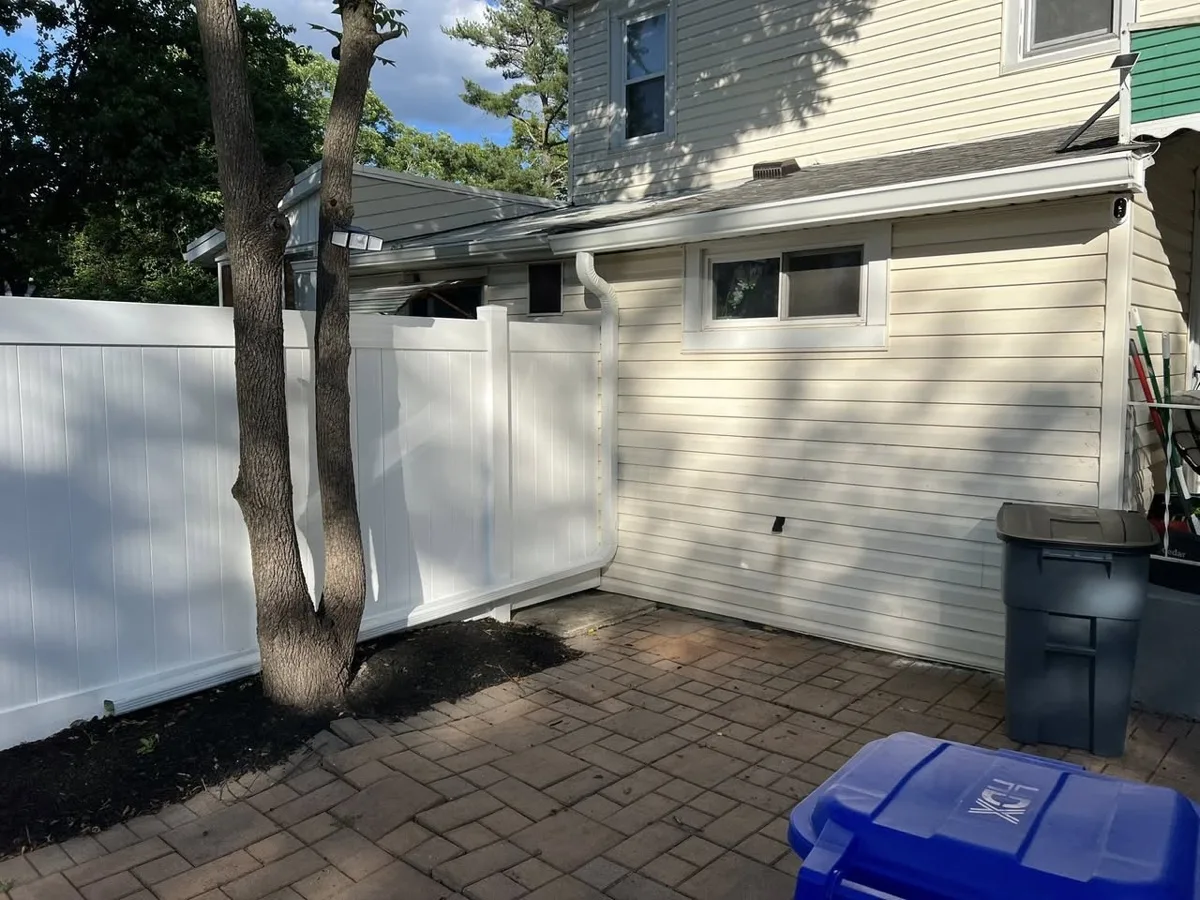
Water pooling beside the foundation, washing out mulch, or freezing across a walkway can point to a downspout drainage problem. Check where each downspout releases water and what happens after it reaches the ground.
A clog, disconnected section, poor placement, or too few downspouts can cause trouble even when the gutter itself is intact.
Signs Downspouts Need Attention
Watch what happens during or right after a steady rain. Safe ground-level clues include:
- Water pouring over one gutter section
- Downspouts dumping water against the house
- Mulch or soil washing away below a discharge point
- Water pooling near the foundation
- Staining on siding, brick, fascia, or trim
- Icy patches forming near walkways in winter
- Gutters that hold water after the storm ends
- Splashback on lower siding or porch areas
These signs do not always mean the gutters need full replacement. Sometimes the system needs cleaning, a downspout extension, a discharge change, a pitch correction, or a closer look at fascia and roofline details.
Trace the Water From the Roof to the Ground
Drainage issues can overlap with roof and siding concerns. Overflowing gutters can affect fascia and soffits. Poor downspout placement can send water toward siding or foundation areas. Clogged gutters can make a roof leak symptom harder to understand.
That is why an exterior inspection should look at the full path of water: roof surface, valleys, gutters, downspouts, discharge location, landscaping, and nearby walkways.
Precision Exteriors reviews gutter flow, downspout placement, and discharge points through its gutters and drainage service.
Cleaning, Temporary Work or Replacement?
Two local examples show why those should be separate decisions:
- In the West Deptford cleaning and temporary-stabilization project, accessible gutters were cleaned and flushed, and one section was temporarily secured. The temporary measure is not presented as a permanent gutter repair.
- In the Haddon Heights gutter and front-extension project, the customer reported new gutters and the front extension/repair completed. The story distinguishes that report from unverified final measurements and rear-repair completion.
Neither example establishes a measured improvement in drainage or that the same work is needed at your home. Ask whether the problem is debris, a damaged or loose section, or the discharge layout. The gutter-cleaning guide explains what cleaning can and cannot fix; use the cleaning and maintenance service when that is the concern.
Questions to Ask Before Changing Downspouts
Before approving gutter or drainage work, ask:
- Where will each downspout discharge?
- Does water move away from the home after it reaches the ground?
- Are extensions recommended?
- Are there areas where water could freeze across a walkway?
- Is the gutter pitched correctly?
- Is fascia or trim damage visible behind the gutter?
- Are nearby roof valleys sending too much water into one spot?
If your gutters overflow or downspouts send water back toward the house, request a free inspection or call Precision Exteriors at 856-292-7282.
Questions homeowners often ask
Why does downspout placement matter?
Downspouts decide where roof water goes after it leaves the gutter, so poor placement can send water toward siding, walkways, landscaping, or foundation areas.
Can downspouts be reviewed during a roof inspection?
Yes, roofline drainage, gutter condition, fascia, and downspout discharge can be reviewed together during an exterior inspection.
Does every downspout problem mean the gutters need replacement?
No, some drainage concerns may involve cleaning, extensions, pitch adjustments, or discharge changes rather than full gutter replacement.