
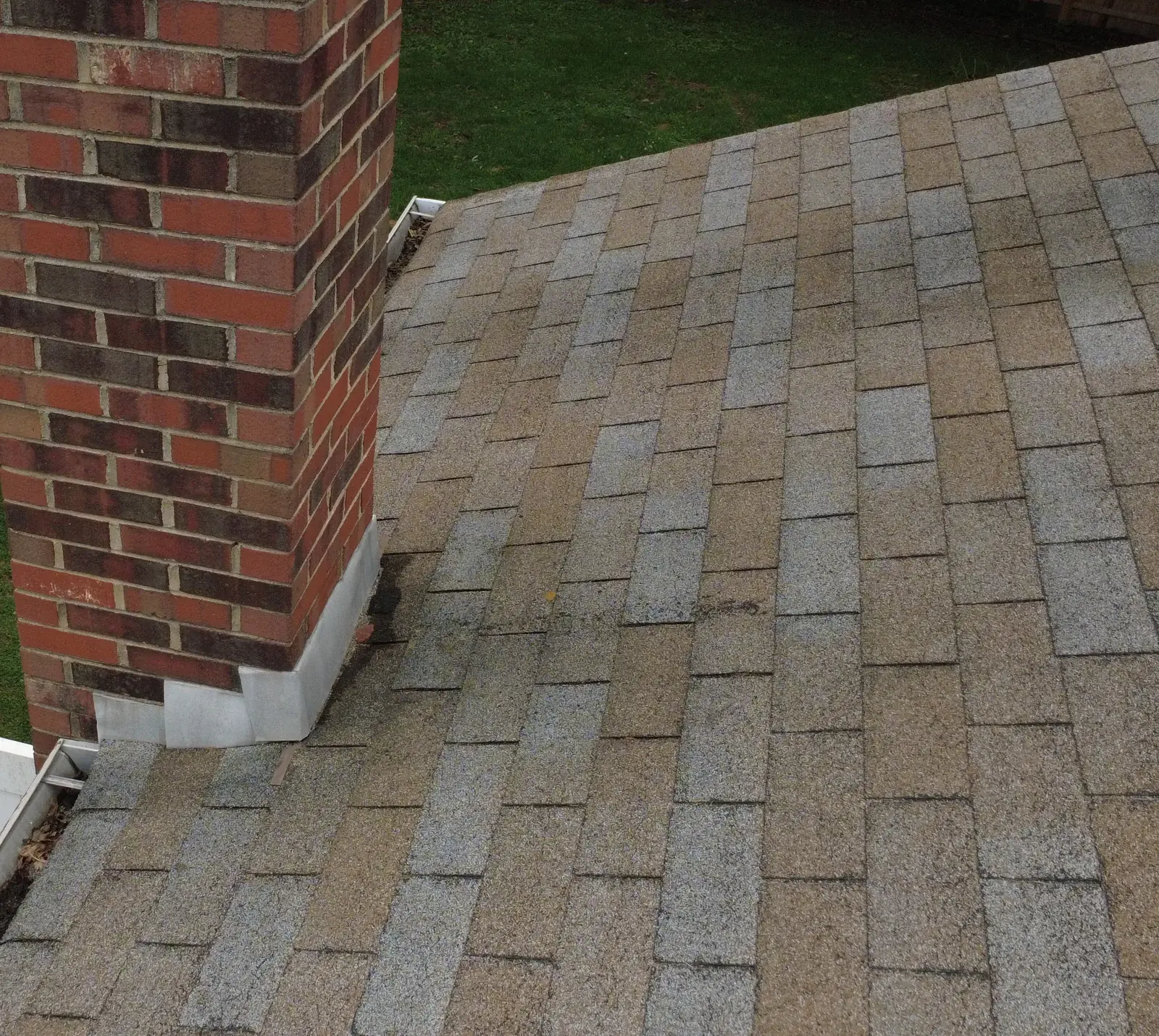
Water near a chimney can enter through the joint where the chimney meets the roof, even when nearby shingles look intact. Flashing directs water around that joint. Loose metal, failed sealant, masonry gaps, and debris behind the chimney are reasons to have it checked.
Precision Exteriors reviews chimney flashing and surrounding roof details during roof repair inspections in South Jersey.
What Chimney Flashing Does
Flashing is the metal water-control detail installed where the roof meets a wall, chimney, skylight, or other penetration. At a chimney, the system may include step flashing, apron flashing, cricket or saddle details on larger chimneys, and counterflashing tied into the masonry.
When installed and maintained correctly, flashing helps direct water away from the vulnerable joint between chimney and roof. When it fails, water can enter even if the surrounding shingles look mostly fine.
Signs of a Possible Chimney Flashing Leak
Check for these clues from the ground or an accessible interior area:
- Ceiling stains near the chimney
- Damp attic framing around the chimney chase
- Water marks on brick or drywall near the fireplace
- Loose, bent, or rusted flashing
- Cracked sealant around flashing edges
- Missing mortar or masonry gaps
- Shingles lifting around the chimney
- Repeated leaks during wind-driven rain
- Debris building up behind the chimney
Do not assume caulk alone will fix the issue. Sealant may temporarily hide a gap, but a durable repair often depends on the flashing design and the roof condition around it.
Why the Leak May Not Be Directly Under the Chimney
Water does not always drip straight down. It can move along rafters, underlayment, decking, insulation, or framing before showing up inside. A stain several feet from the fireplace may still be related to chimney flashing or roof-to-wall water movement.
That is why a roof inspection should include both the exterior flashing and the attic area below or near the chimney when accessible.
Repair or Replacement Around a Chimney
A chimney flashing repair may be possible if the shingles, decking, and surrounding roof area are in good condition. The repair may involve resetting or replacing flashing, addressing counterflashing, and checking nearby shingles.
If the roof is older, shingles are brittle, decking is soft, or leaks have repeated for years, replacement of a larger roof area may be more realistic. Ask whether the damage is limited to the chimney junction or extends into the surrounding roof.
When to Check Chimney Flashing
Chimney flashing should be reviewed:
- After a leak near the fireplace or chimney wall
- After high wind or falling branches
- Before roof replacement
- When buying a home
- When old sealant is cracked or pulling away
- When debris collects behind the chimney
If roof replacement is planned, ask how chimney flashing will be handled in the written scope.
If you see water near a chimney, fireplace, or upper ceiling, request a free inspection or call Precision Exteriors at 856-292-7282.
Questions homeowners often ask
How do I know if a roof leak is coming from chimney flashing?
Common clues include stains near the chimney, damp attic framing around the chimney chase, loose metal flashing, cracked sealant, or repeated leaks during wind-driven rain.
Can chimney flashing be repaired?
Sometimes, but the right repair depends on the condition of the shingles, flashing, masonry, counterflashing, and roof deck around the chimney.
Should chimney flashing be checked during roof replacement?
Yes, chimney flashing should be reviewed during roof replacement because it is one of the most important water-control details on the roof.